
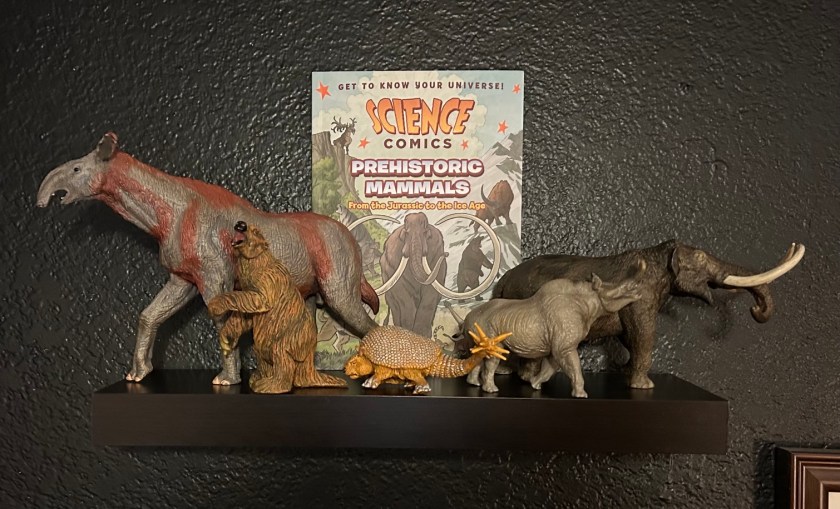
The “Science Comics” series includes several books on various topics in science, from zoological to astronomical. I have previously reviewed their previous paleontologically themed entry in the series, Dinosaurs, Fossils and Feathers. While mostly about dinosaurs, it also gave a bit of an introuction to the history of paleontology as well, highlighting several important people and the discoveries they made. Today’s review covers a companion book from the series, all about Prehistoric Mammals.
Other books in the Science Comics series have various authors and illustrators, but Joe Flood returns to write and illustrate this one, having previously illustrated the dinosaur volume.
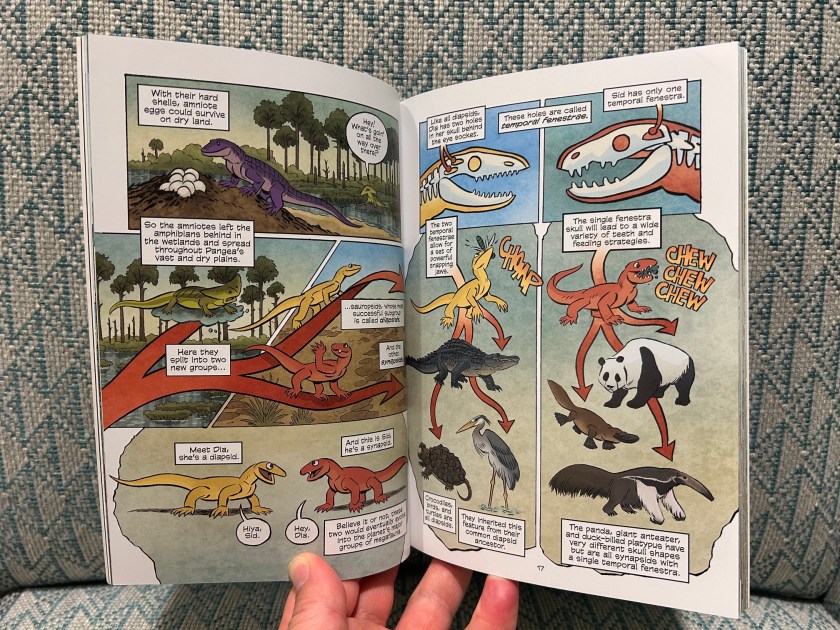
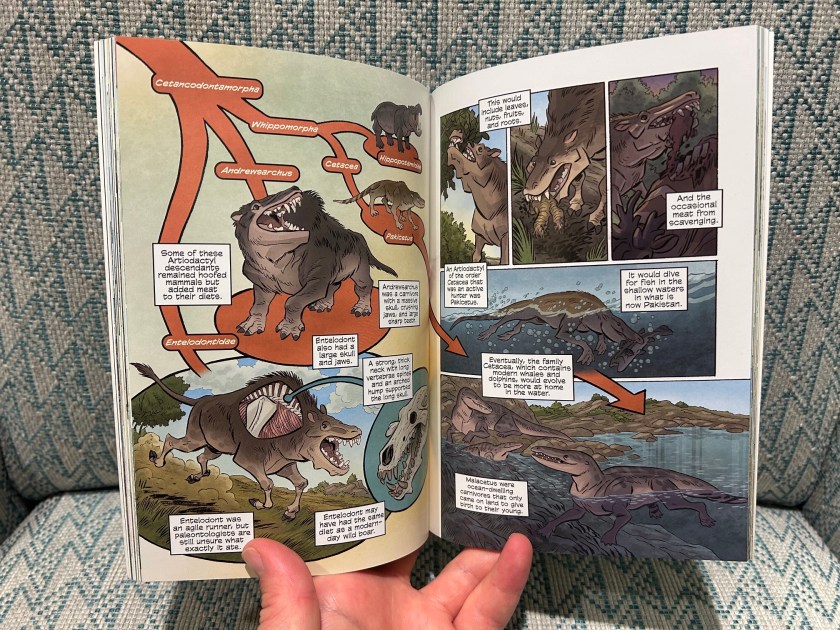
The book is roughly organized along the mammal family tree, occasionally taking detours to explore the various branches. Despite the subtitle “From the Jurassic to the Ice Age”, the book actually starts in the Carboniferous Period, with basal tetrapods. From there, it shows the divergence of mammal and archosaur lineages with color coded critters, red for the mammal line, and yellow for the archosaur line, demonstrating their changes over time. (These color coded animals are mostly generalized, hypothetical representations of various stages of evolution; actual, specific species are illustrated with more natural looking colors.)
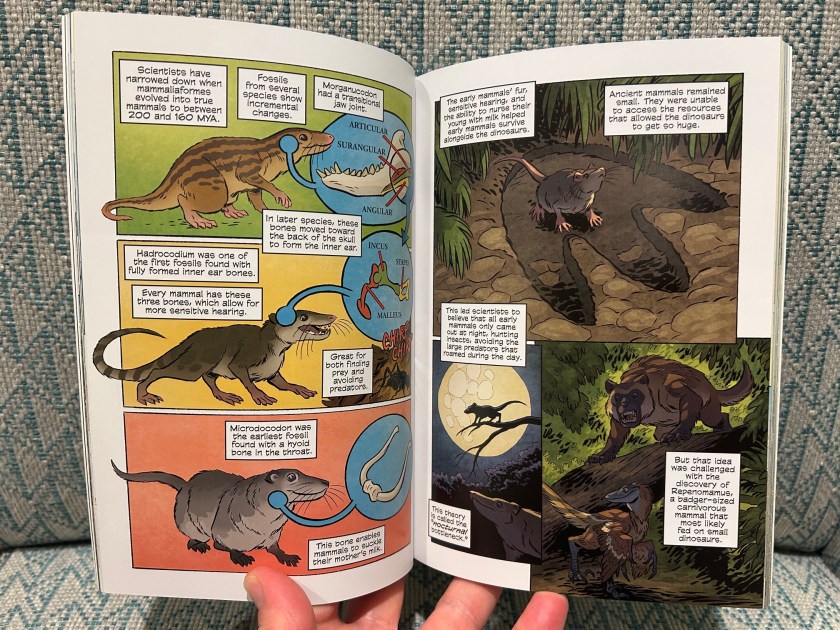
As the book travels through time, we are introduced to various mammal groups as they appear in the fossil record, from ungulates (including whales), to marsupials, to probiscideans. Interwoven with these evolutionary twists and turns, we also bear witness to the changing climate which influenced many of these these adaptations.
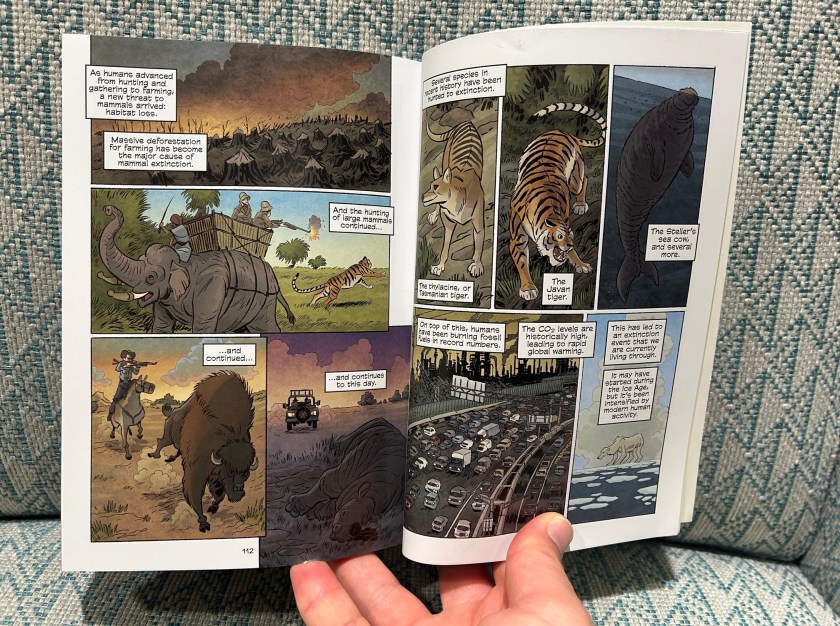
The book concludes with a brief discussion on the ways humans are driving extinction and climate change today, though it’s nowhere near as detailed as the much longer discussion on this topic that we get in Mammal Takeover!
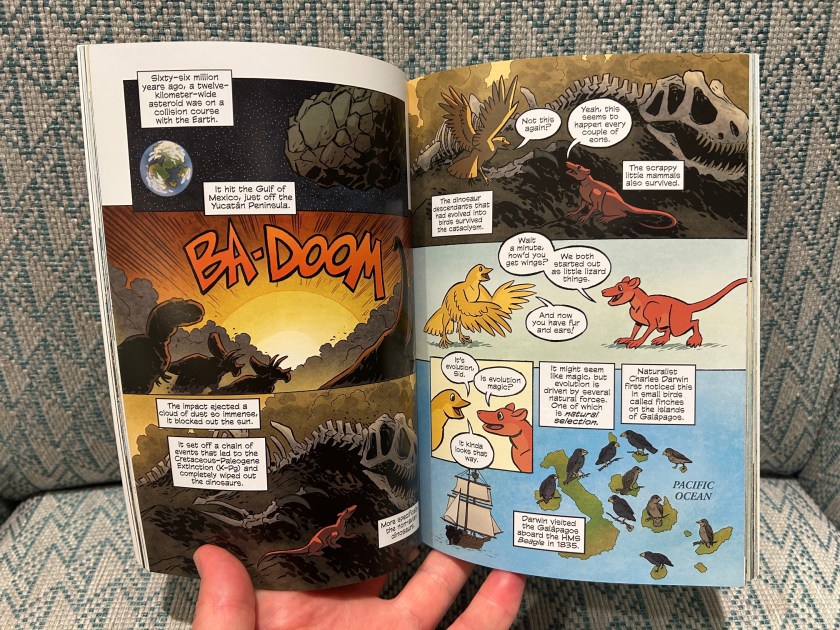
Other than a brief mention of Darwin’s visit to the Galapagos Islands, we don’t get any history of science in this book, unlike in the Dinosaurs volume, which is unfortunate. I would have liked to see a bit about George Gaylord Simpson’s theories on South American isolation, for example, among other famous figures who worked with extinct mammals.
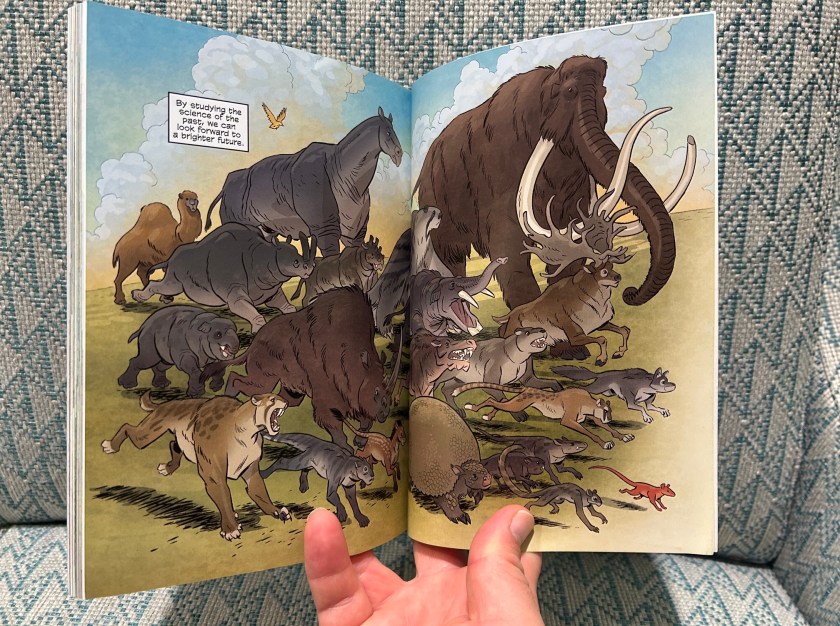
While I was disappointed by the lack of a historical element this time, I enjoyed Prehistoric Mammals just about as much as its predecessor, Dinosaurs, Fossils and Feathers. Both are well illustrated, and deliver their information in an engaging way. I’m happy to give this one my Dino Dad Stomp of Approval as well!
For some other prehistory themed comics and graphic novels that I’ve read, see my reviews of Paleocene, Did You Know Dino? Hell Creek & Jurassic America, History of the World in Comics, Europasaurus: Life on Jurassic Islands, Ted Rechlin’s Jurassic, Sharks, SUE, and T. REX, Abby Howard’s “Earth Before Us” #1, #2, & #3, and Hannah Bonner’s cartoon prehistories.



One comment