
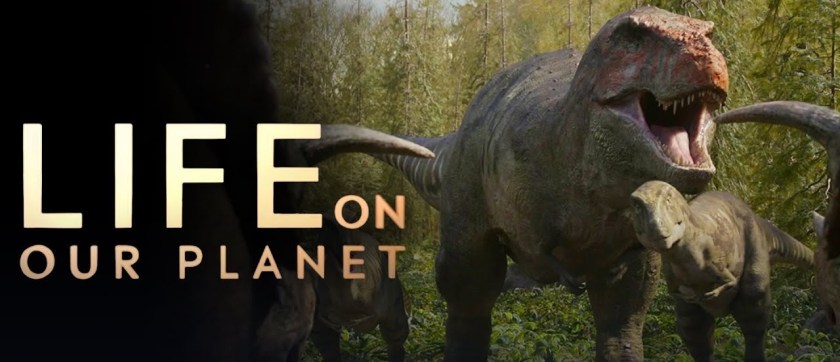
Life on Our Planet is an eight-episode prehistory documentary narrated by Morgan Freeman, not to be confused with the retrospective David Attenborough documentary film A Life on Our Planet, both of which are featured on Netflix. (Confusing as the similar titles may be to some, apparently both names are meant as homages to the seminal Attenborough documentary, Life on Earth, as is the general format of the particular show we’re looking at here.)
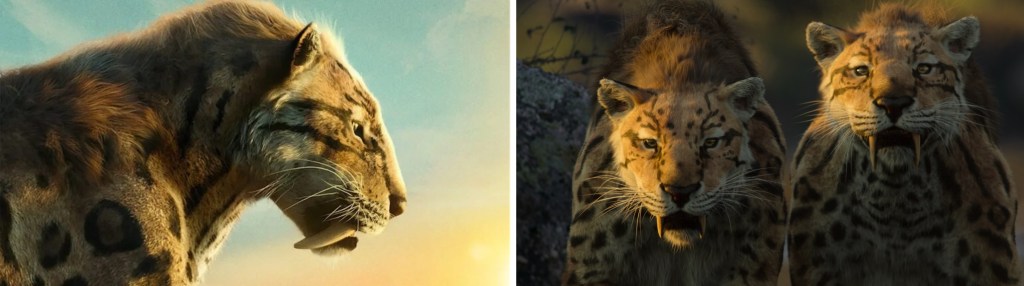
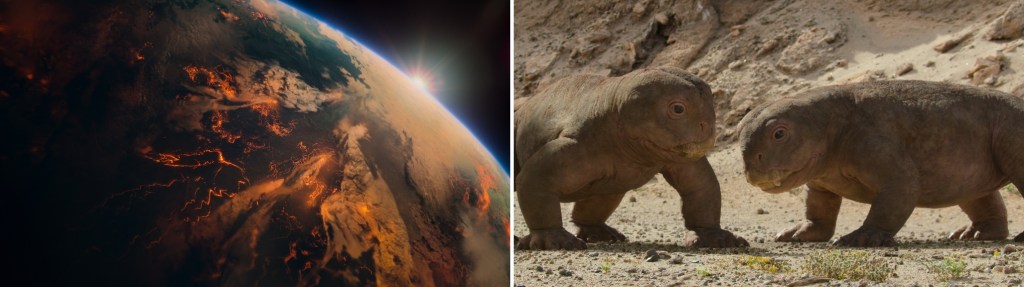
Episode one introduces some of the general concepts of the series, while episodes two through eight follow a generally chronological view of the history of life on Earth. The show doesn’t always pay close attention to the exact period its in, concerning itself more with “what followed what” in the general story of life, which isn’t a bad idea on its face, and mostly works, at least as far as the strictly prehistoric footage goes. There’s a strong emphasis placed on extinction events, which does help to ground the show a little more into definite time periods to ensure that the chronology moves generally forward. It also gives the show its main framing in its discussion of evolution, emphasizing how extinction events shape the opportunities and development of the creatures that survive through them.
One heavily critiqued aspect of Life on Our Planet concerns the perceived over-reliance on footage of animals in the here and now, and indeed, while I neglected to strictly keep track, it does seem that the modern footage equals or even surpasses the amount of prehistoric scenes depicted. This wouldn’t necessarily be a bad thing either, and indeed, there’s probably a version of this that could have worked fantastically, truly emphasizing the connections between the ancient world and the present one.

However, there’s something that feels tacked on about it as presented here, leaving me with the distinct feeling that this footage exists mostly to pad out the runtime and save money on visual effects. The connections between the prehistoric life shown and the modern creatures it segues into are often tenuous, but frequently over-emphasized in the narration, an all-too-frequent habit among some similar “Deep Time” sorts of projects, that can and does lead to misapprehensions among less informed viewers. Even the sequence describing the creation of the Channeled Scablands in Washington state felt like a bit of a let down. It almost got me excited, as for once it wove a tightly framed story about the Missoula Floods that felt like it fully integrated the ancient and modern perspective, but both the CGI and live action footage used was rather lackluster, especially in comparison to the detail given to other catastrophic events in the rest of the show. The main geologic features that demonstrate how we know what happened in this instance are also never discussed, and unless I’m completely spacing out when I watch it, I don’t think the region or the flooding incidents are ever even mentioned by name, all of which minimizes the actual educational value of even showing this sequence in the first place. (I fixate on this particular example of the poor usage of modern topics as it is relevant to my background as an ex-creationist: honest scientists KNOW what a scale-breaking, continent-scouring, catastrophic flood SHOULD look like thanks to this massive scar on the land, which is not evident in the rest of the typical geologic record. I believe it gets a passing mention in God’s Word or Human Reason?)
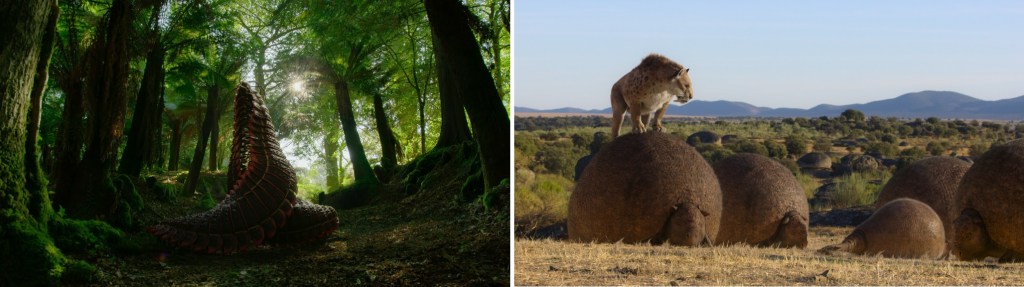
The CGI looks generally decent, and plenty of the models look rather nice. The Cameroceras feels big and imposing, and the algae growing on its shell is a particularly nice touch. The Arthropleura look as awe-inspiring as these giant millipedes should be, making me wish we had more time to see more of their life habits. (As strangely seems to be the case with most paleomedia, the Paleozoic creatures in general seem most consistently true-to-life compared to the animals of later eras.) The Terror Birds and Glyptodons stand out to me as particularly good representation of their taxa as well.
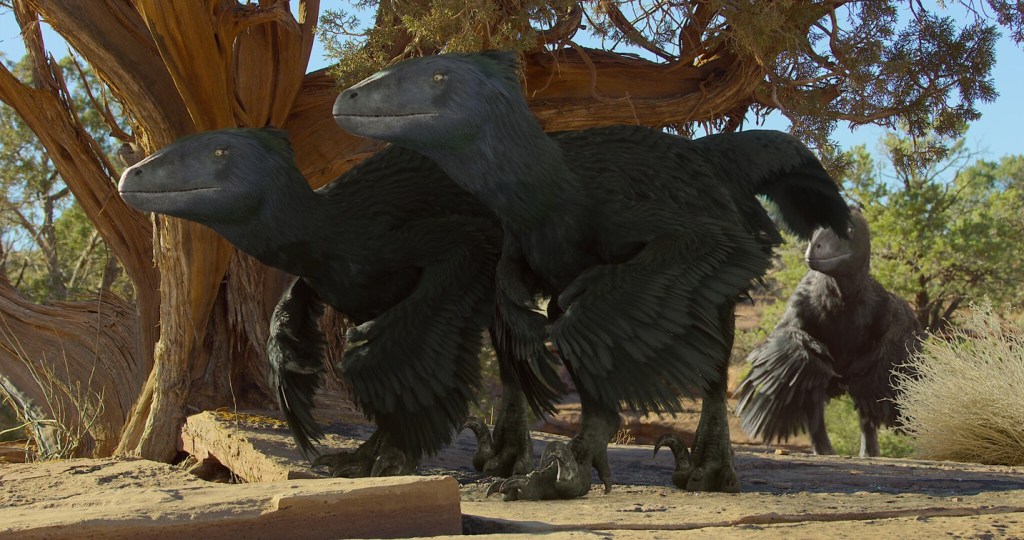
Some models do look a bit off, though. Non-avian feathered dinosaurs as a rule have dodgy feathering, particularly in the attachment of the wing fingers. (Pro tip: treat the wing feathers as extensions of the fingers! Thinking about them in the same way that cartoon birds are often given “fingers” actually won’t put you too far off in how they should attach to the hand.) The Triceratops look like slightly modified Jurassic Park assets, and there has been much discussion online about the look of the T. rex‘s head, and the particularly gnarly-looking skin of the Allosaurus.
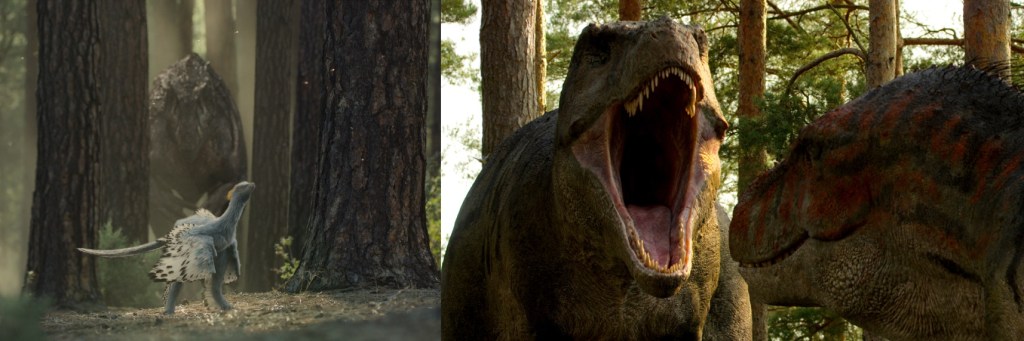
Perhaps the most cutting remark I could make about Life on Our Planet however, is that it did not consistently hold my attention. I found myself finishing more than one episode the following day after I started it. Maybe my fellow paleonerds and I have simply become spoiled after the revelation that was Prehistoric Planet, but while this one has its moments, on the whole it is certainly the lesser of the two. It’s really too bad: the idea of a paleo documentary narrated by Morgan Freeman sounds amazing in concept, but in execution it was rather lackluster. Even Freeman’s script left something to be desired. As Natee Himmapaan put it on the Love in the Time of Chasmosaurs podcast, a drinking game based on the number of times Freeman uses the word “dynasties” is not recommended! Actually, a Facebook friend of mine accidentally came up with a far better concept for the show when he mentioned that he thought that this blooper reel of Freeman reacting to some of the wackier prehistoric animals was the straight-forward trailer depicting what the actual show was going to be like. Now THAT’S a unique spin on one of these that I might actually get excited about!
If Life on Our Planet has you feeling disappointed, I highly recommend Netflix’s follow-up series, The Dinosaurs, which vastly improves on many of the weaknesses of L.o.O.P. For other documentaries I enjoyed, see my reviews of Prehistoric Planet, the dino-celebration of Why Dinosaurs?, Prehistoric Road Trip (hosted by the perennially delightful Emily Graslie), and We Believe In Dinosaurs, an in-depth look into the political intrigue behind the scenes of Ken Ham’s Ark Encounter.
 Dino Dad Reviews
2 comments