
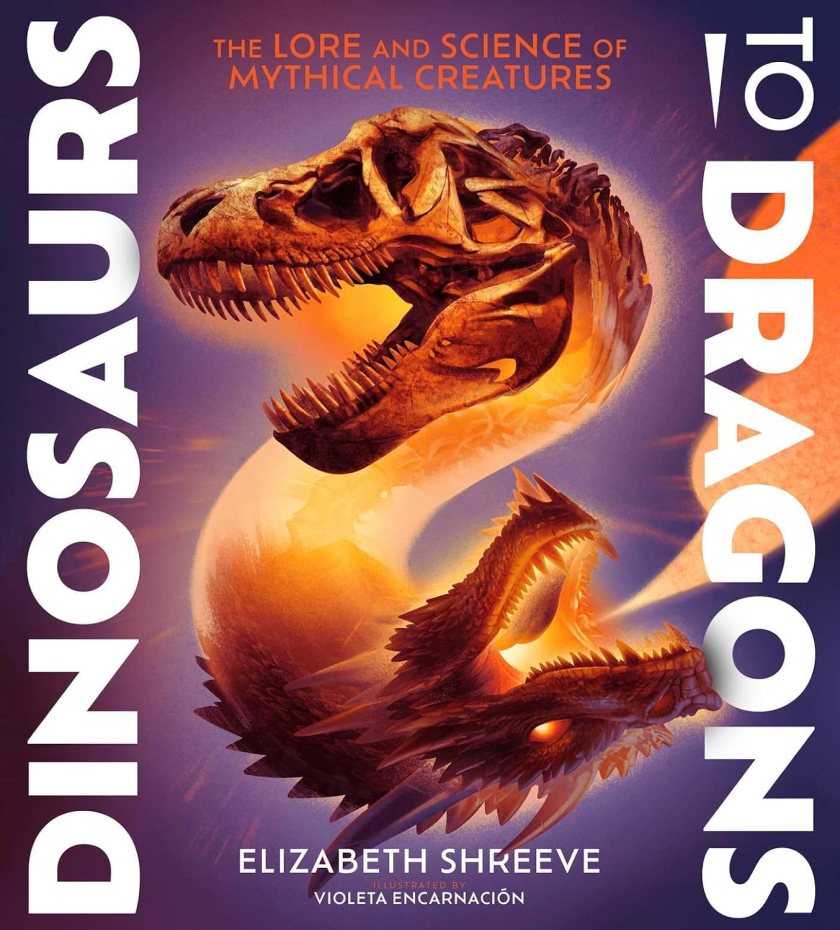
Fantastic beasts abound in the stories told around the world by different human cultures, and still they capture our attention to this day. People also often enjoy speculating on the origins of these mythical beasts, wondering whether they were simply invented whole cloth out of a storyteller’s imagination, or whether there might be some real-world inspiration behind them. That’s subject of Dinosaurs to Dragons: The Lore and Science of Mythical Creatures by Elizabeth Shreeve, author of one of my favorite children’s books on evolution, Out of the Blue.
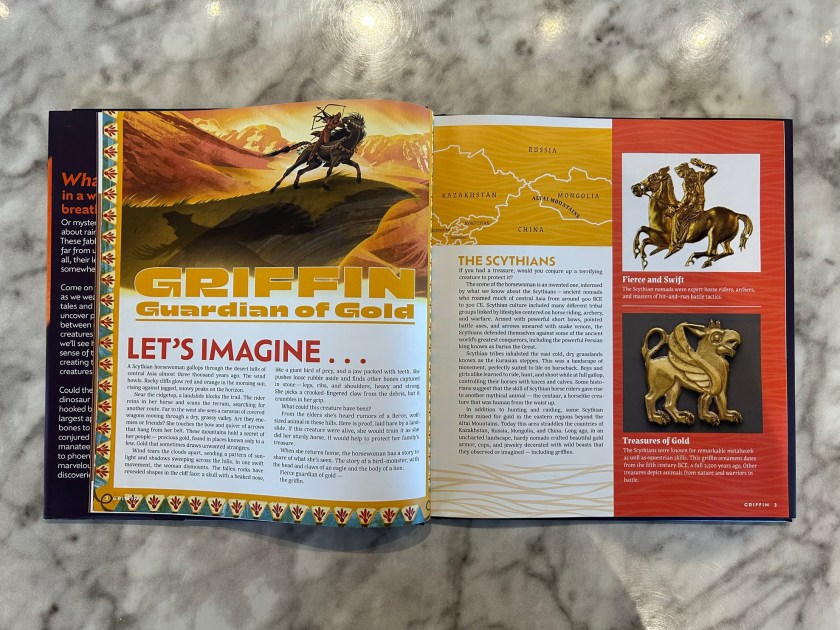
Dinosaurs to Dragons examines ten different mythical creatures; the Griffin, the Unicorn, the Yeti, the Bunyip, Mermaids, the Kraken, Fairies, the Phoenix, Quetzalcoatl, and of course Dragons. Each creature profile starts with a story from the perspective of an ancient person who would have believed in said creature, followed by a recounting of some of the relevant lore, followed by speculation on what could have inspired the creature.
Dinosaurs to Dragons is certainly an interesting book, but I would take some of the suggestions with a grain of salt. While Shreeve for her part generally couches the connections between mythical creatures and their supposed inspirations in “maybes”, it’s worth noting that some people have taken these connections as much more definitive than they probably should.
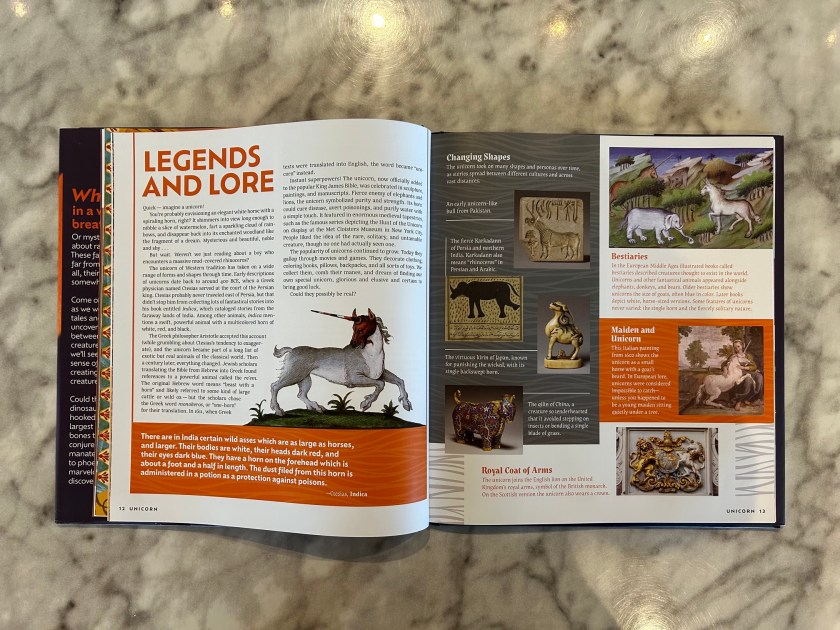
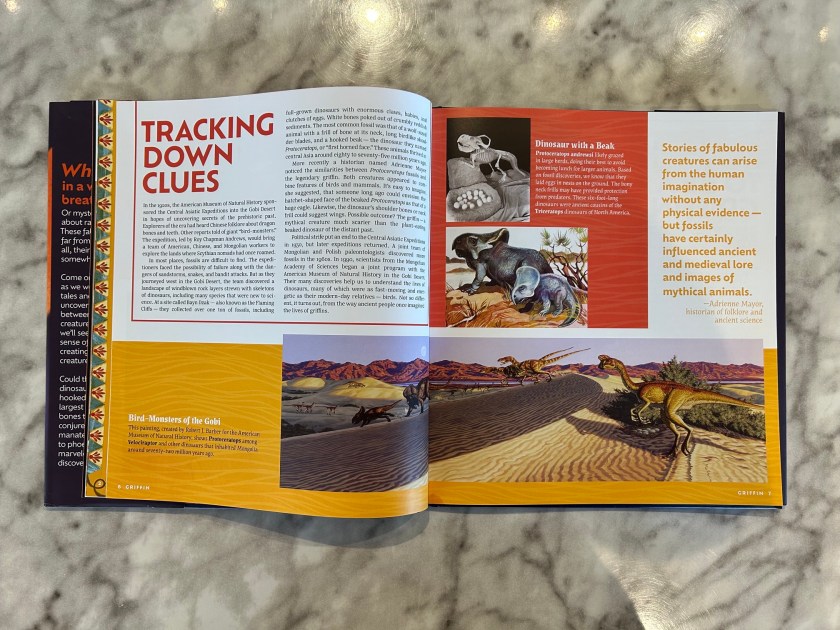
Just as a counterbalance to this book, I would point readers to the work of Mark Witton, who has published a pretty thorough take-down of the idea that Protoceratops specifically inspired the griffin legend. See his initial blog post on the subject, as well as his later academic paper published along with Richard Hing. Darren Naish has also recently written that it might be problematic to assign the inspiration of the Unicorn to any one particular animal.
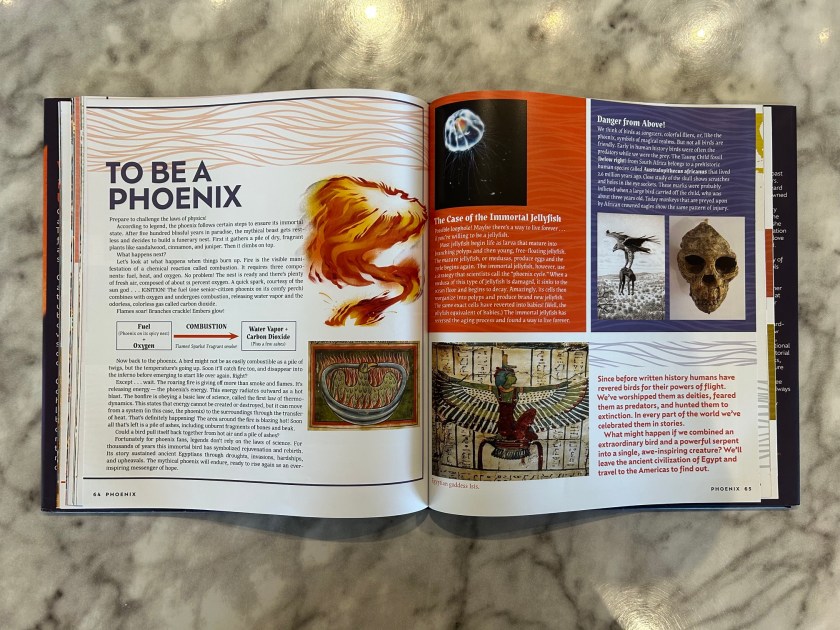
That being said, I found this book to provide interesting food for thought for young readers, particularly in the sections where Shreeve engaged in scientific examination of each creature to imagine what it would take for them to exist in the real world. Spoiler, virtually all of them defy some aspect of natural laws, from the impossibility of six-limbed griffins seemingly related to other tetrapods, to the thermodynamics-defying lifecycle of the phoenix.
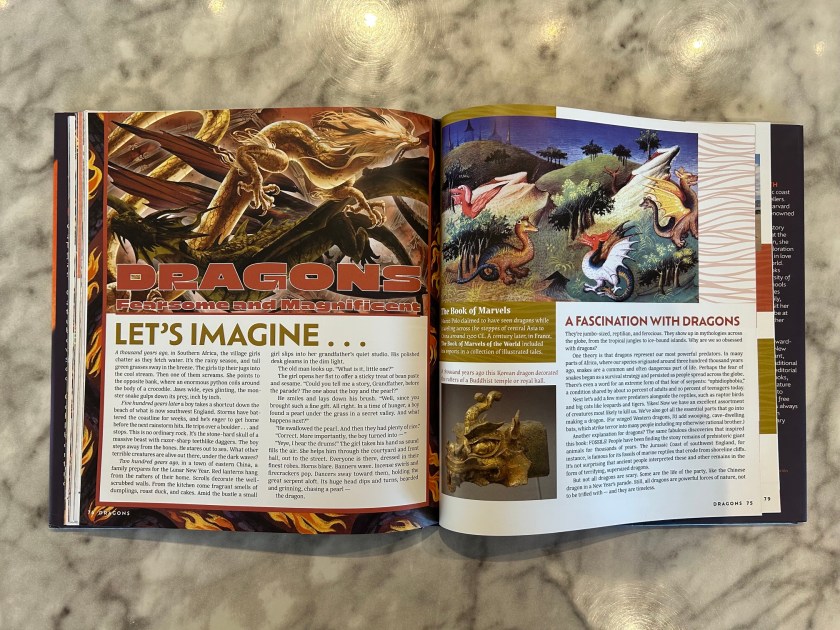
I recommend giving Dinosaurs to Dragons a look if you come across it! It has some interesting ideas, and may inspire kids to think a little more deeply about the stories we grow up with, and the world around us.

