
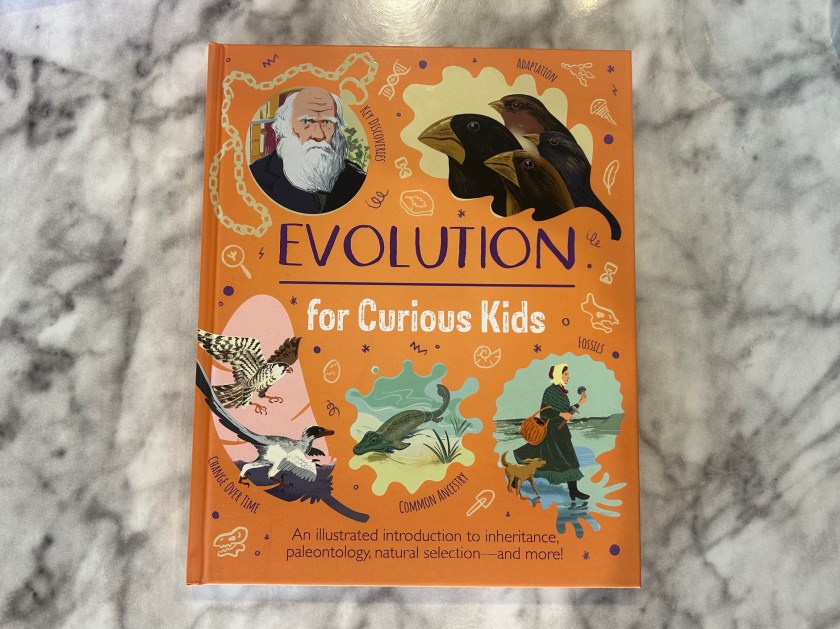
I was browsing Half Price Books yet again when I came across an intriguing-looking book called Evolution for Curious Kids. It had been a while since I had reviewed a decent book on evolution, so I decided to buy it and take it home with me.
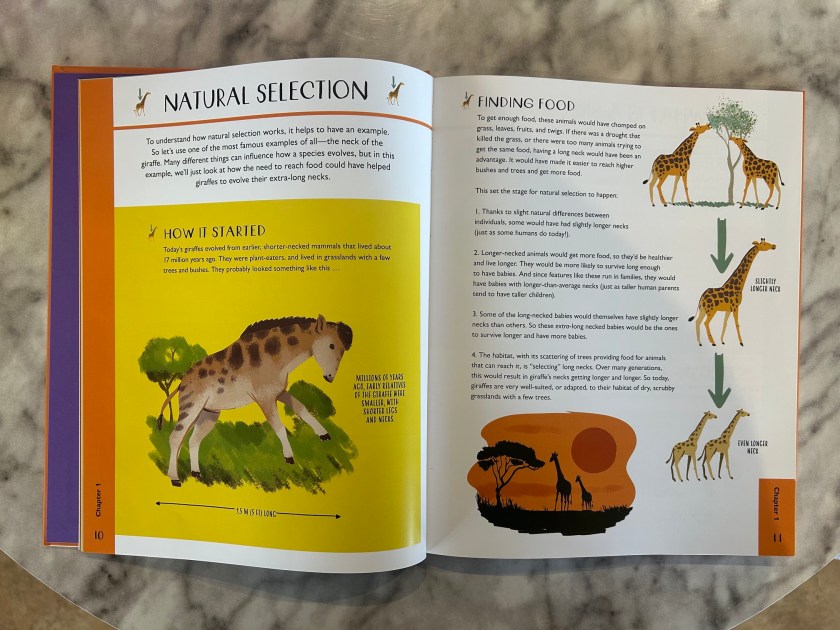
The cover looked rather nice, with pleasant paintings of Darwin and his finches, a falcon and a Velociraptor, a Tiktaalik, and Mary Anning all gracing the front and drawing me in. I unfortunately felt like there was a minor dip in the quality of the illustrations inside once I actually cracked the book open. The illustrations still remained serviceable, but they did not quite live up to the expectation I had based on the cover.
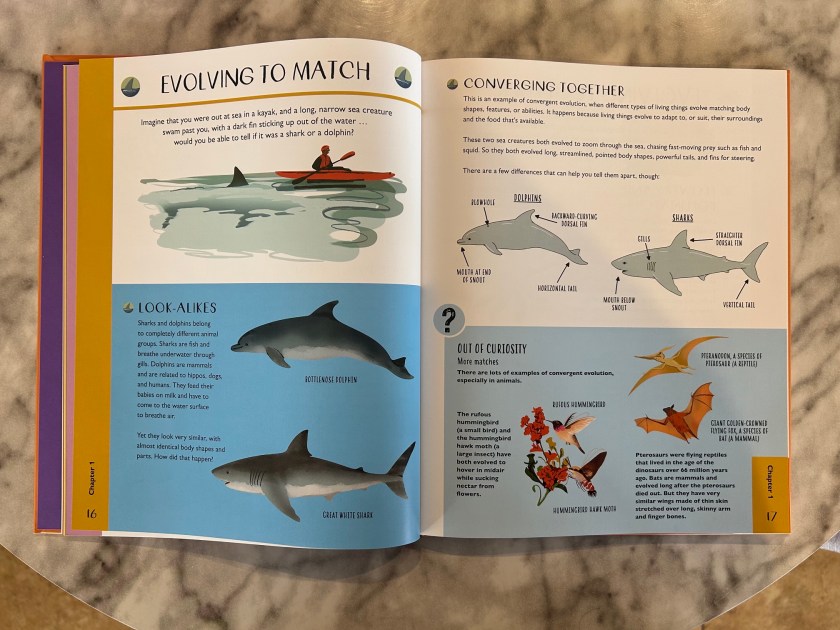
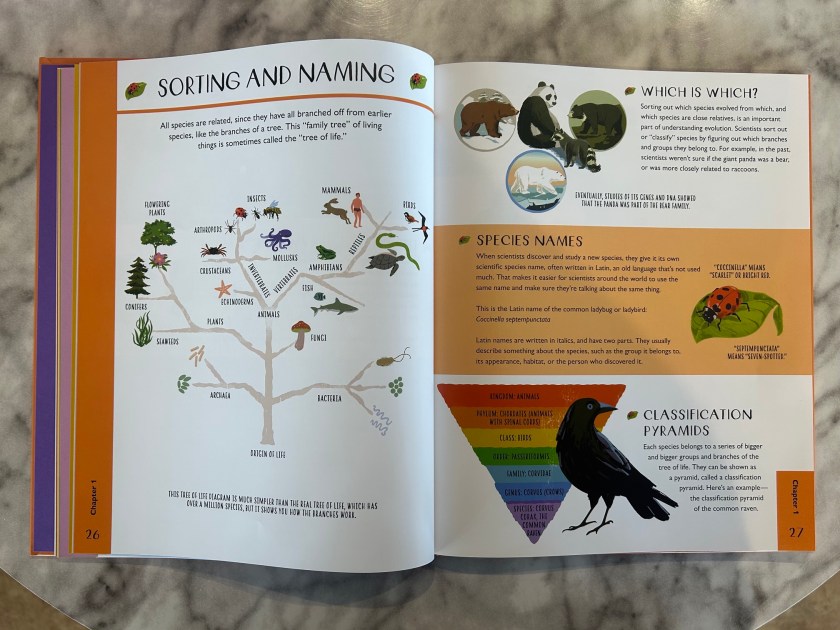
I was further disappointed to find that while the information presented was generally decent in broad strokes, there were nevertheless enough errors to give me pause while reading. The cladograms (“tree of life” diagrams) were consistently inaccurate, an unforgiveable offense in a book determined to teach kids about evolution. There was a big, overarching cladogram near the front, which was littered with polytomies and paraphyletic groupings, a smaller one which completely mucked up the evolutionary relationships of reptiles, and what I assume was meant to be a third one about mammals that didn’t even bother to be tree-like.
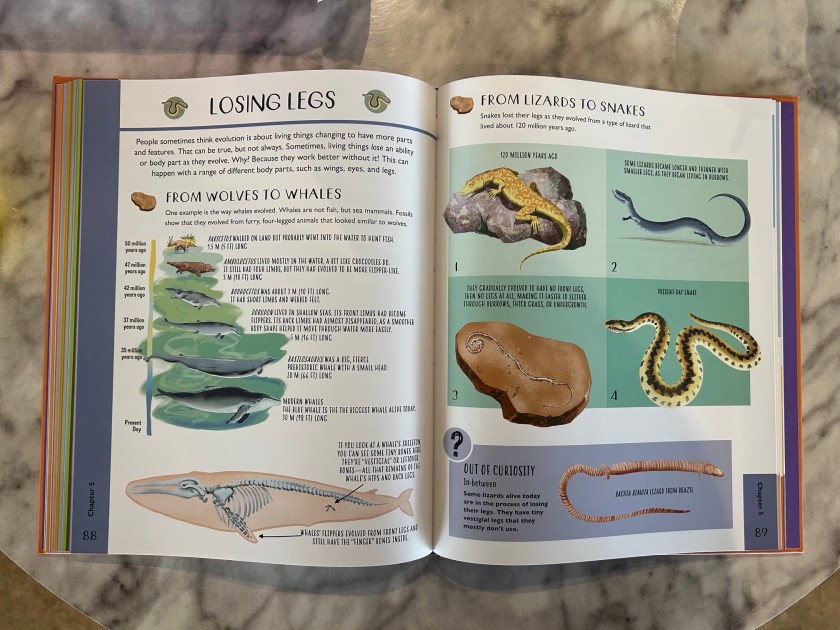
As a particular fan of whale evolution, I was disappointed to see that the text describes them as having evolved from wolf-like ancestors. This incorrectly leads readers to assume whales descend from carnivorans, rather than the even-toed hoofed mammals as is actually the case.
From a more subjective viewpoint, I also was generally dissatisfied with the overall organization of the book. I’m having trouble articulating what exactly rubbed me the wrong way about it, but the general introduction of concepts didn’t always feel like they flowed naturally from one to the other. I just feel as though it could have been more engaging if presented slightly differently.
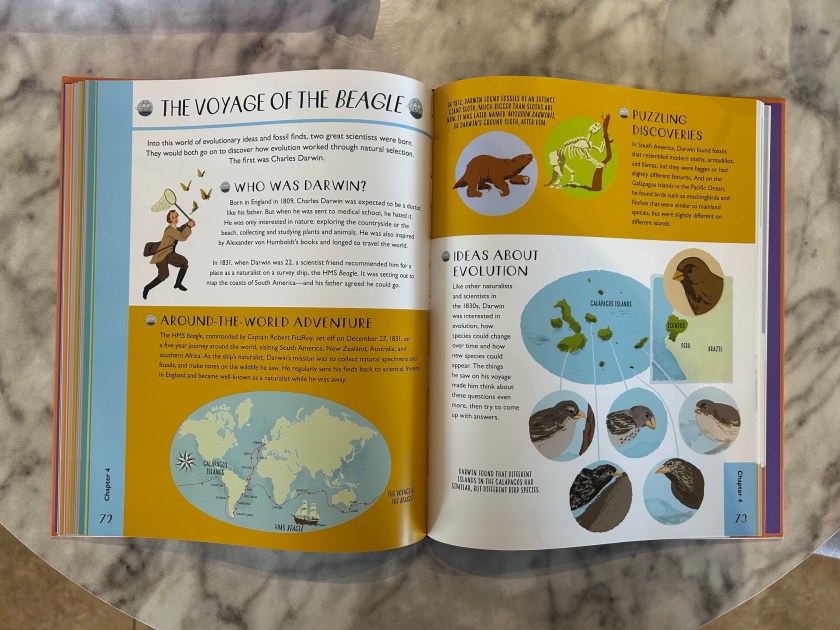
It’s unfortunate, because there’s some decent stuff here, such as the history of evolutionary theory, but I just can’t quite recommend it overall. For better books on evolution, check out some of my previous reviews. Though aimed at much younger children than this book, I would be remiss not to mention the excellence of Grandmother Fish. Out of the Blue does a similarly excellent job of explaining evolution, though it is mostly focused on the transition of vertebrates from sea to land rather than general concepts in evolutionary theory. The “Incredible Evolution” series by Quarto Publishing is also generally good, though I occasionally have some similar complaints about organization (see my reviews of books 1, 2, 3, and 4).

