
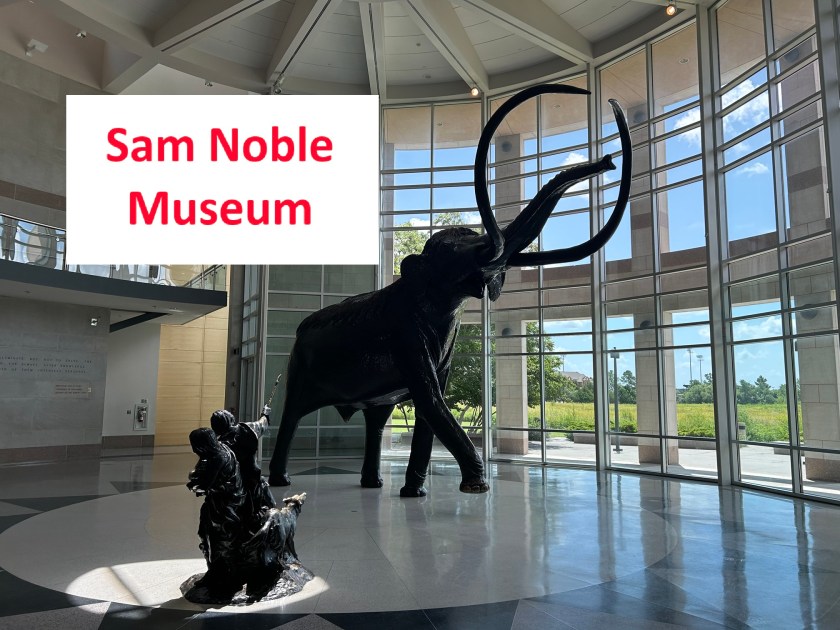
I have wanted to visit the Sam Noble Museum for some time now. Situated about three hours’ drive north of me, at the University of Oklahoma, it’s tantalizingly close enough to the Dallas area to make a day trip of it. A recent overnight vacation to Oklahoma City gave me the perfect excuse to visit, and so now I finally get to share my experience here! (We also visited the nearby Museum of Osteology just beforehand, which was a worthwhile experience in itself.)
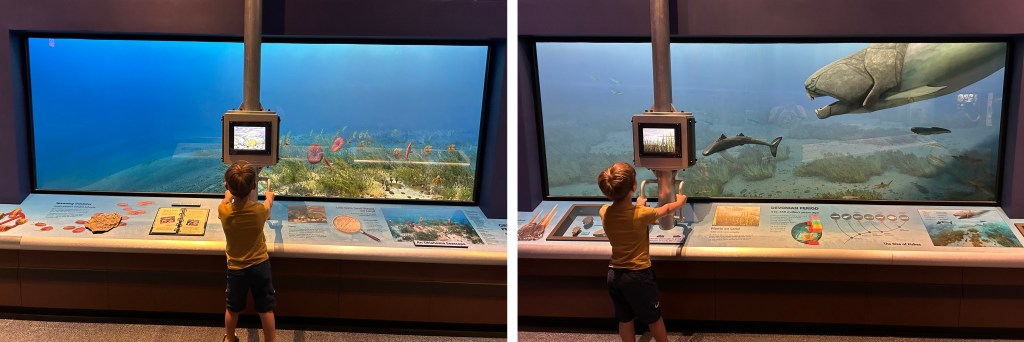
The Sam Noble Museum includes several halls of permanent exhibits, including the modern ecosystems and traditional peoples of Oklahoma, but of course for the purposes of this review, I’ll be focusing on the Hall of Ancient Life. This Hall is organized in a “walk through time” format, starting with the Precambrian, and proceeding all the way through the Cenozoic.
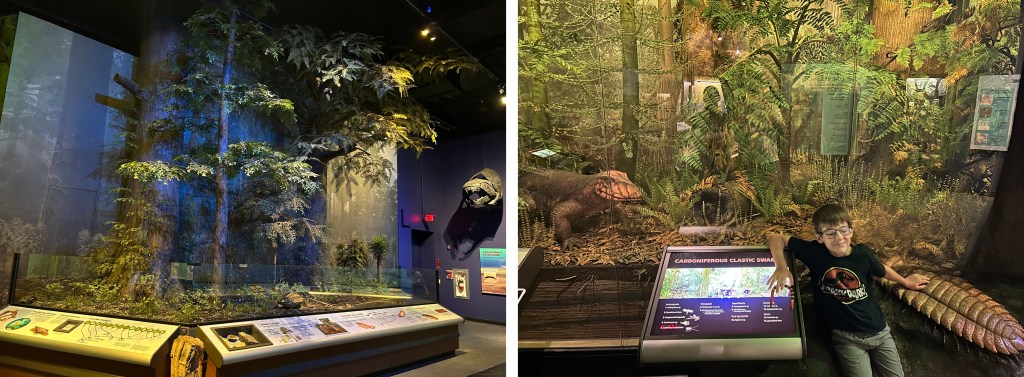
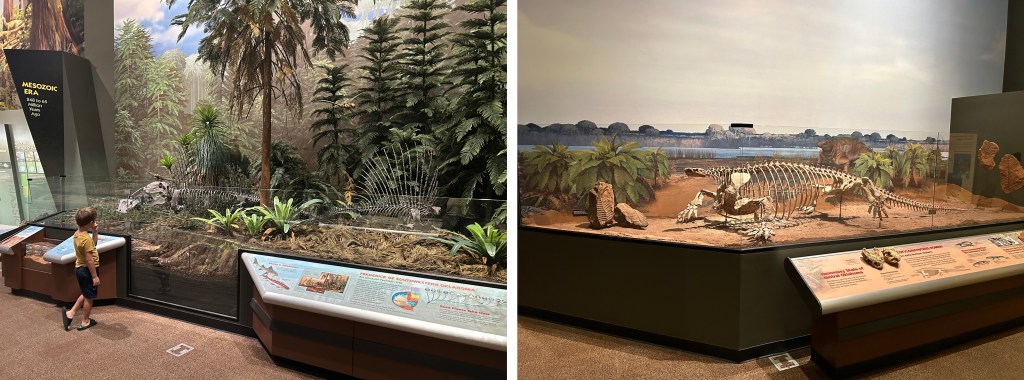
In this design, I found it vaguely similar to the New Mexico Museum of Natural History and Science, even down to similar species and displays. Both museums include displays depicting paleo-environments filled out with plants and sculptures, though they differ in where they put their primary focus. The Sam Noble’s most lavish displays grace the Paleozoic section of their walk-through, with faux aquariums and lush Carboniferous forests.

That’s not to say the rest of the hall is any less impressive. The Sam Noble has two dinosaur skeletons that represent the largest known individuals of their respective kinds. The first is an Apatosaurus, which SV-POW readers may recognize from Mathew Wedel’s posts about “the giant Oklahoma Apatosaurus“. The main exhibit path takes visitors past it (and its Saurophaganax adversary) at ground level, while nearby elevators take visitors right past the apatosaur’s face, giving a unique eye-to-eye view. The other saurian giant is a particularly large Pentaceratops, which is proudly displayed along with a Guinness World Record plaque for “Largest Dinosaur Skull”. (Speaking of Wedel, keep an eye out for the diminutive Aquilops neighboring the Pentaceratops, which he has also written about.)

Between the Apatosaurus and Pentaceratops, there’s a section on Cretaceous sea life, as well as a classic Deinonychus vs. Tenontosaurus display. Cenozoic mammals round out the experience, which perhaps stand out a little less next to their impressive neighbors, but are nice to see nonetheless. Interactive displays throughout help keep visitors (especially younger ones) engaged with the subjects at hand.


At the time of my visit, there was also a paleoart exhibition on the second floor, featuring illustrations both vintage and modern. The point of the exhibit was to demonstrate the evolving nature of paleoartistic reconstructions, though I feel that the presentation was somewhat lacking in this regard. There were some works of classic paleoart on display, as well as some contemporary pieces of varying expertise produced by local students. While both of these are good inclusions in a paleoart exhibition, there wasn’t really anything in the way of professional contemporary paleoart, or even much professional work dating after the mid 20th Century. I felt this gave a very incomplete view of the purported purpose of the exhibition. If the exhibition lasts for much longer, I would strongly recommend filling out these gaps in the presentation in order to better educate guests on the history of paleoart. (If you happen to be around on August 27th, however, paleoartist Brian Engh will be giving a paleoart talk from 5-6:30!)

Overall, I really enjoyed my visit to the Sam Noble Museum. As a larger institution with very detailed displays, and plenty of them, I highly recommend it to anyone who enjoys natural history museums. I myself would definitely consider making the three hour trip from Dallas to visit again, especially if they plan on featuring any interesting special exhibits or events in the future. If you have the time, I strongly recommend a visit to the nearby Skeletons: Museum of Osteology as well. These two museums complement each other nicely, and make for an excellent, full day of natural history content.
For some other museums I have visited within driving distance of Dallas, check out my reviews of the Fort Worth Museum of Science and History, the SWAU Dinosaur Science Museum, Texas Through Time, the Heard Natural Science Museum, the Mayborn Museum, the Whiteside Museum, and Dinosaur Valley State Park.
 Dino Dad Reviews
I mentioned this on Insta, but I’m surprised you didn’t get a picture of the Deinonychus display.
LikeLike
Oh, I did, there were just so many things there, and my review was getting so picture heavy already! I think I’ll edit in at least a mention of the Deinonychus, though.
LikeLiked by 1 person