

I’ve long felt that the subject of paleobotany seriously needs some good introductory texts, at every level. Whether for novices or experts, however, there mostly only seem to be books that touch on various topics within paleobotany, but not much in the way of approachable, general overviews. Fortunately, When Plants Took Over the Planet goes some way towards addressing this lack.

Written by Dr. Chris Thorogood and illustrated by Amy Grimes, this book examines the evolution of plant life, and belongs to the “Incredible Evolution” series by Quarto Publishing. (For the other books in this series, check out my reviews of When the Whales Walked, When We Became Humans, and When Dinosaurs Conquered the Skies.)
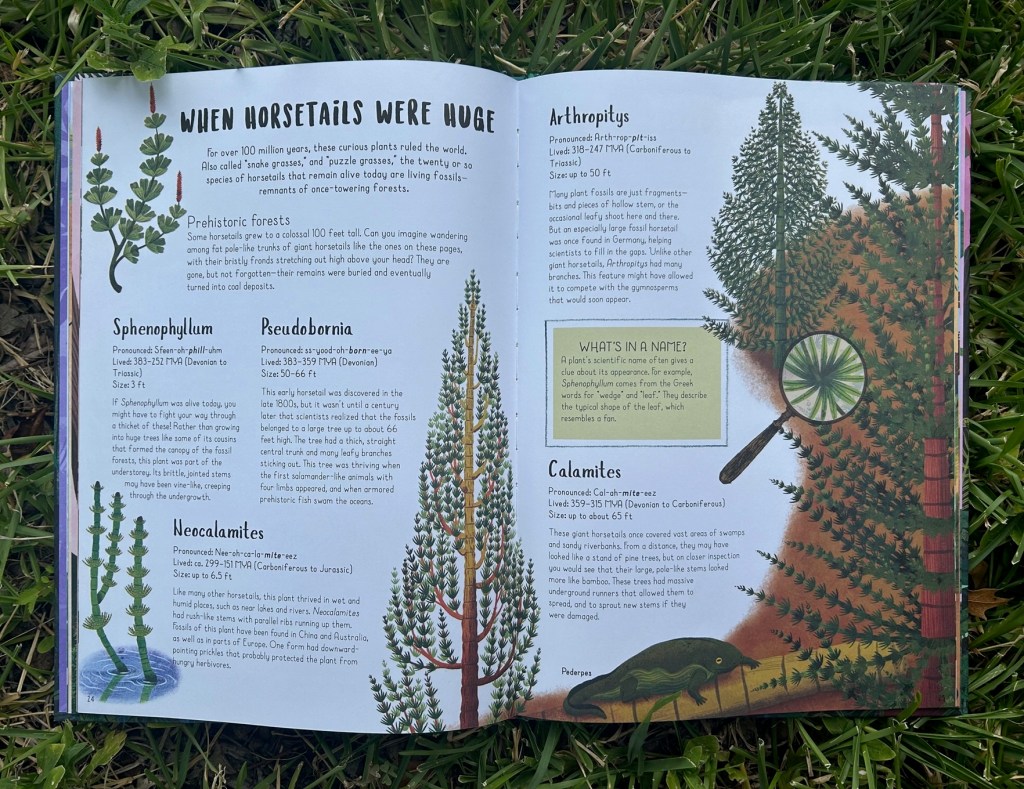
The book is roughly organized according to related groups (or “clades”) of plants. While not exactly a timeline-based book like Plants! Explorer, it does present the different clades in order of when they would have split from each other. This gives some sense of chronology, but the representative species on each page may be from any number of time periods, and so reader’s don’t necessarily see a strict progression through the specific geologic eras.
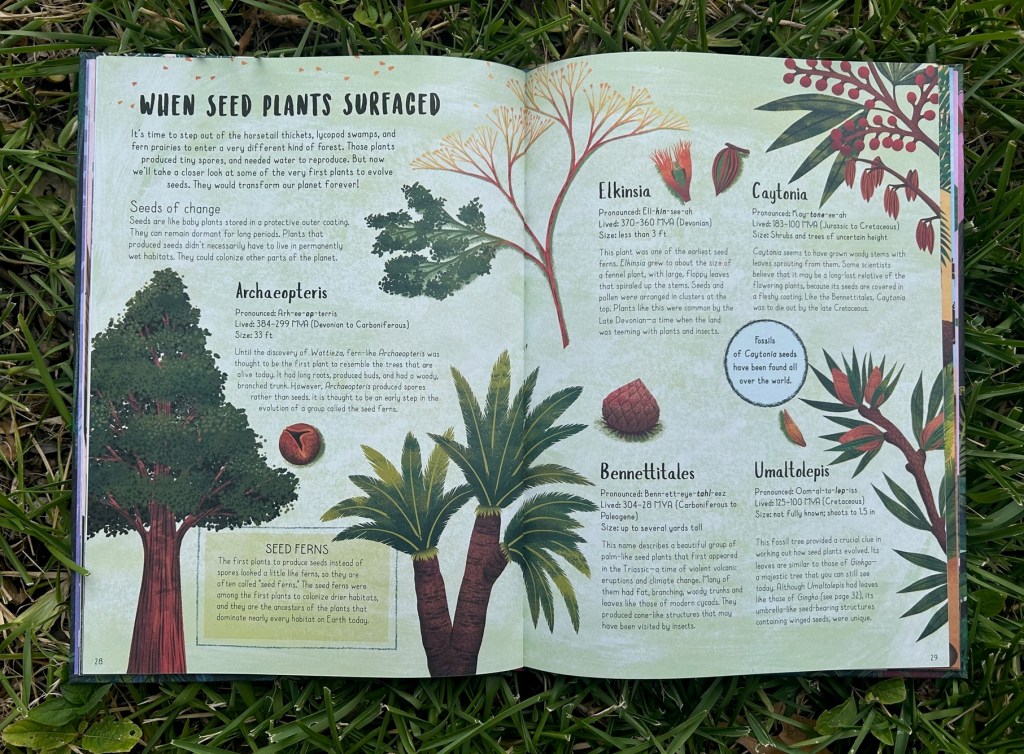
Similar to the broad definition of the word “bugs” used in Bugs! Explorer to mean any creepy-crawly invertebrates, this book uses the term “plants” in similarly broad fashion to mean essentially “photosynthesizing organisms”. This allows the book to include algae in its discussion of plant evolution, which otherwise do not technically count as part of the “Plant Kingdom”, proper.
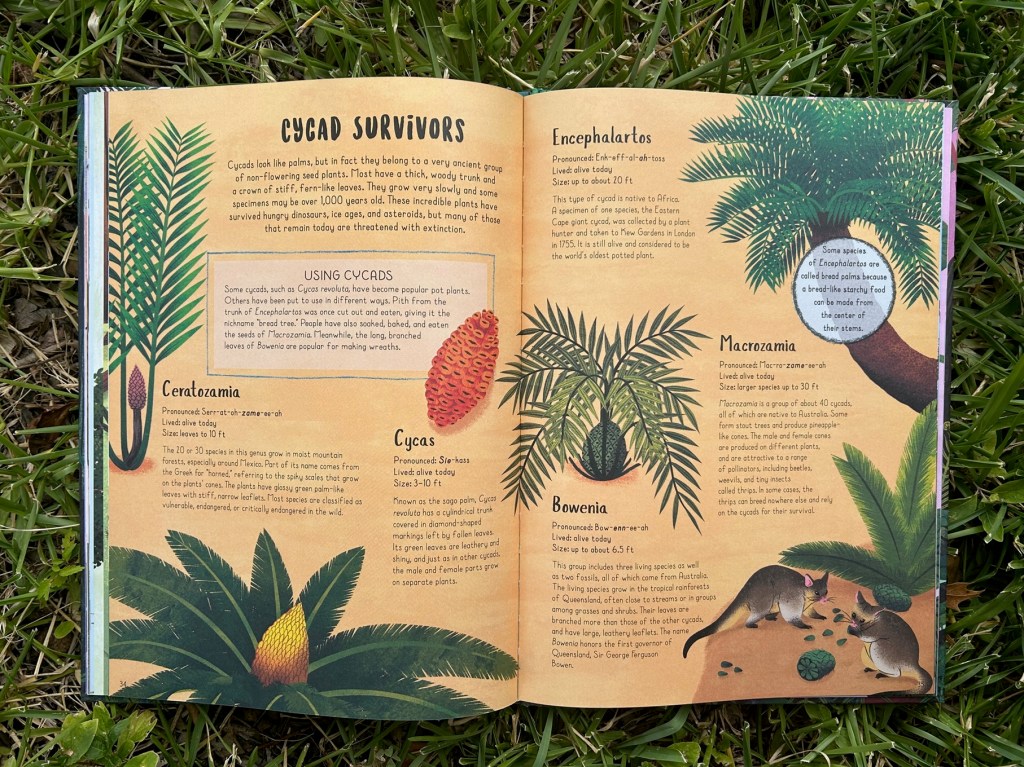
The illustrations are not necessarily super detailed, but are nonetheless fairly rigorous, especially considering the “soft” (for lack of a better term) art style. Each illustration pretty clearly represents the plant meant to be depicted, and I imagine one would not have a hard time recognizing them in comparison to more detailed images.

I highly recommend When Plants Took Over the Planet. Paleobotany deserves more love, and good introductory books like this are just what the field needs to get more people interested in it. This is an essential book for any budding paleonerd’s library, and it gets my enthusiastic Stomp of Approval!

 Dino Dad Reviews