
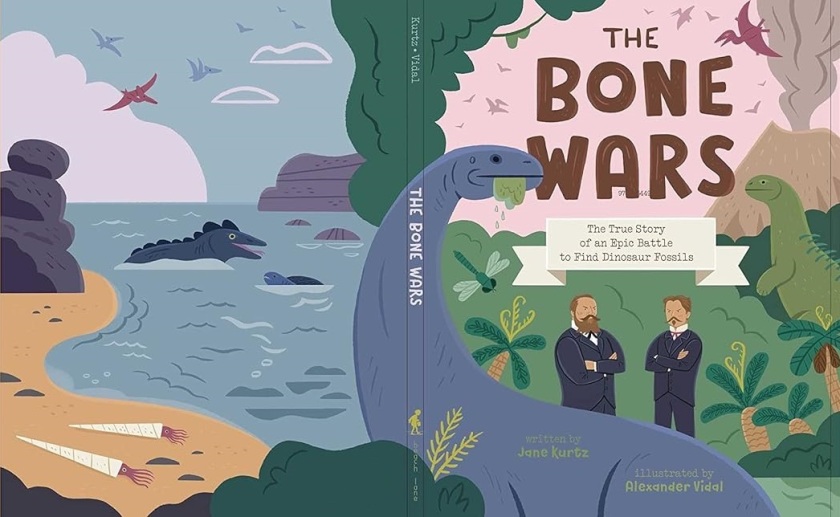
The story of Cope & Marsh has taken on a sort of legendary, if not mythic, status among the famous stories in paleontology. The reckless abandon with which they pursued their bitter rivalry has ensured a place of infamy for the pair of them in the annals of the history of prehistory. But what’s this? I’ve hardly mentioned them on my blog! They’ve been featured as one story among many in other historical overviews I’ve discussed (see Dinosaurs: Fossils and Feathers, and Tales of the Prehistoric World for examples), but I have not featured a dedicated book about them until now.

Written by Jane Kurtz and illustrated by Alexander Vidal, The Bone Wars is a delightful introduction to this period of paleontological history, simplified into an easily digestible format for its child audience.
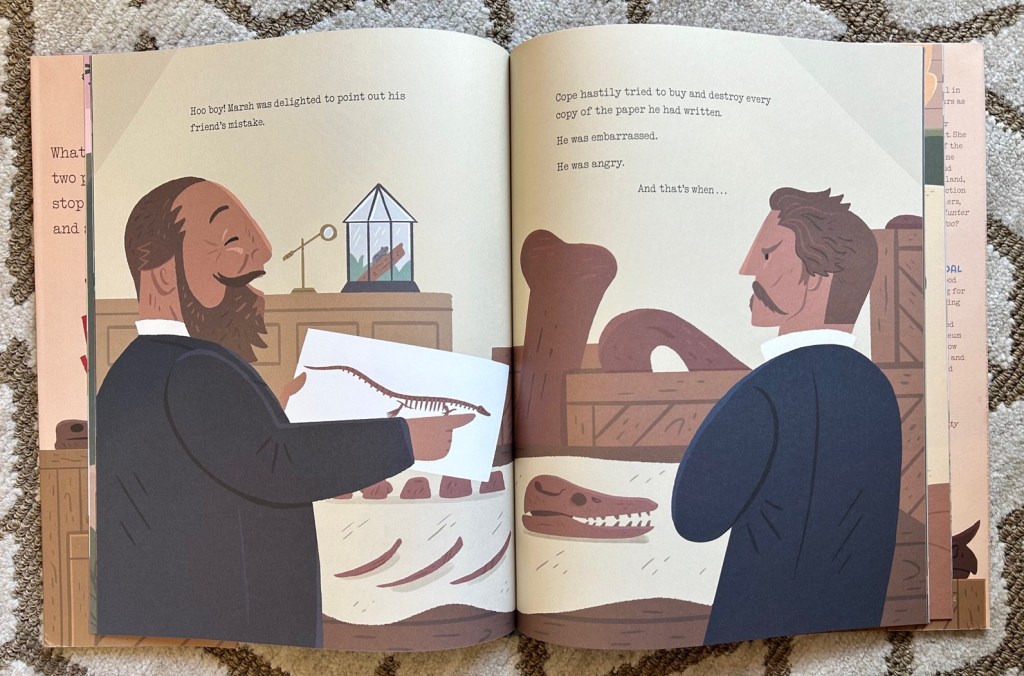
Kurtz covers all the “greatest hits” of the Bone Wars, from the subterfuge employed by the rival dig teams, to the two men’s eventual financial ruin and academic disgrace. It all starts, of course, with the infamous Elasmosaurus incident, in which Marsh thoroughly embarrassed the irascible Cope by pointing out he had put the head on the tail (a tried and true source of inspiration for many a paleo meme). Kurtz’s writing has a light and often amusing tone, which fits the material; it really only seems appropriate to approach such self-serious egotists with an air at least bordering on light ridicule.
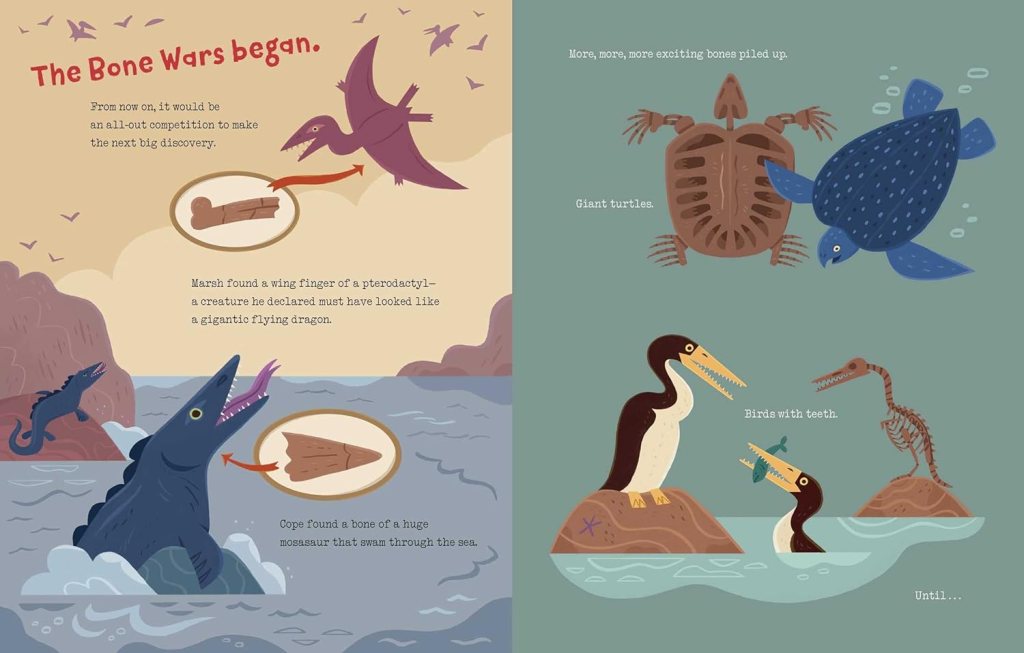
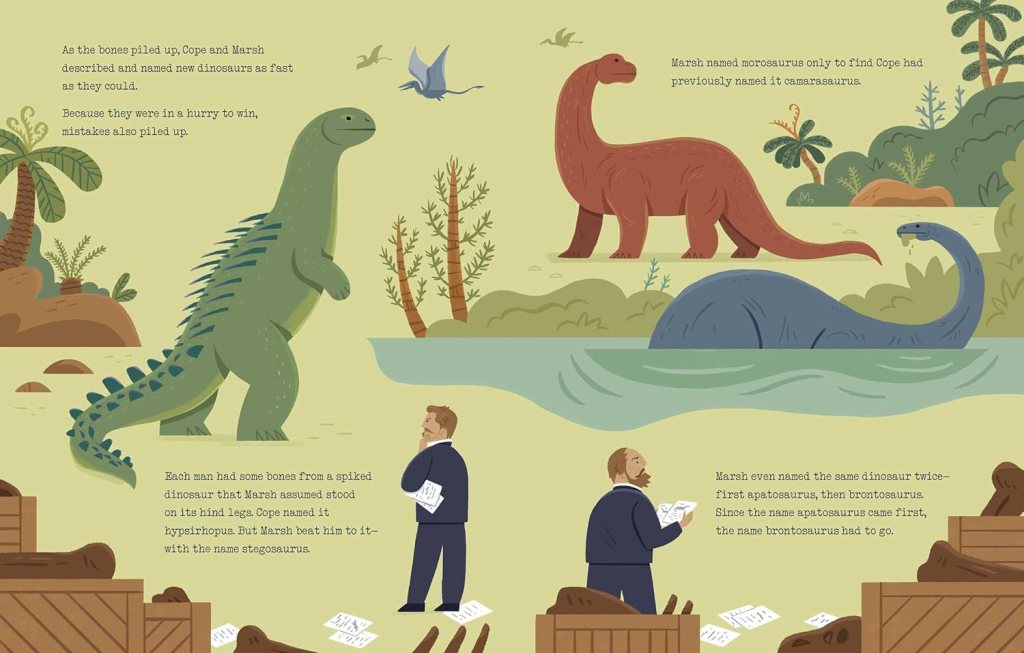
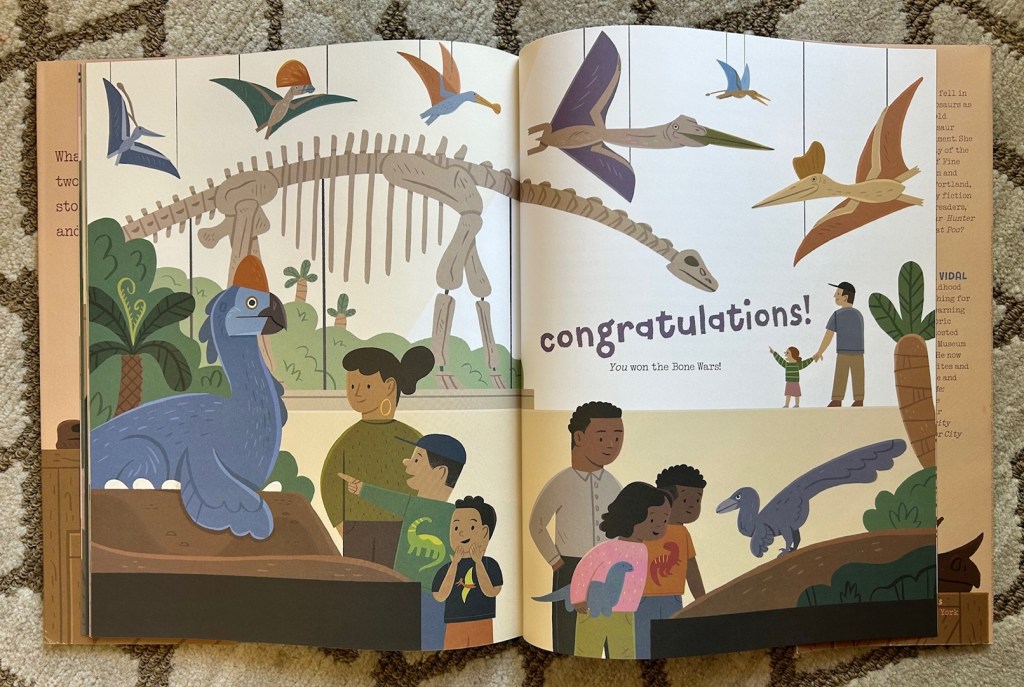
Vidal makes an interesting choice with the illustrations. They are rendered in a bright, child-friendly style that I quite like, but with the interesting twist of a deliberately retro design for the prehistoric creatures. This take presents a couple of advantages for the book. First, it shows the creatures as Cope & Marsh themselves envisioned them, adding to the historical perspective the book imparts to the reader. Secondly, it has the advantage of “future proofing” the book against any further changes in interpretation, as it intends to educate about past designs already out of scientific favor. Lest you think Vidal is afraid of obsolescence, however, he does depict some modern designs towards the end of the book, showing museum patrons viewing some feathered theropods and modern-style pterosaurs.
An author’s note and an illustrator’s note at the end explain some of the creative choices made in making this book, including possible over-simplifications and omissions, providing a bit of extra context that might aid those interested in further learning. In that way, readers can springboard from this book the way science grew out of the often messy legacy of Cope & Marsh. As Kurtz writes, while neither man can really be said to have “won” the Bone Wars, in a way, it’s really the rest of us who have, with the mountains of fossils and the interesting questions they left behind serving to boost ongoing research even into the modern day.
The Bone Wars is an excellent and delightfully illustrated introduction to the topic, and is particularly suited to its target audience. I highly recommend this to any and all burgeoning paleonerds as an exploration of an important piece of the history of the field. I’m quite happy to give this book my Dino Dad Stomp of Approval!!! For more books that cover the history of paleontology, see Dinopedia, Fossils From Lost Worlds, Daring to Dig, She Found Fossils, and the various Mary Anning books I’ve reviewed.

 Dino Dad Reviews
4 comments