
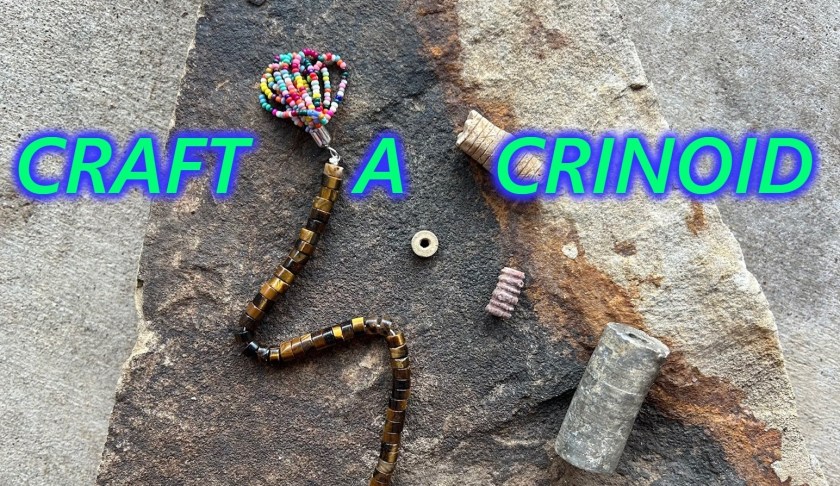
I’ve volunteered with the Dallas Paleontological Society on a number of occasions, and they often give away small fossils that members have collected from various local areas. Among the most common fossils that find their way into these giveaways are segments of crinoid stems. Commonly known as “Sea Lilies” for their flower like shape, these creatures are members of the echinoderms, which includes sea stars, sea urchins, and sea cucumbers. The family relationship might not be obvious at first, but like their cousins, crinoids are radially symmetric, and some crinoid species even have star patterns in their stem segments that recall their sea star cousins.

Whole body fossils of crinoids are rather rarer than their disconnected stem segments, and while the Dallas Paleo Society tries to have visual aids to help visitors to our booths decipher the sometimes fragmentary fossils we show them, it’s much more engaging to have a 3D reconstruction to get a better sense of what you’re looking at. DPS has several toy ammonites, trilobites, and the like to help with those fossils, but no company I am aware of has yet made a mass-produced sea lily model. While pondering this, it occurred to me that perhaps one could simply make one out of beads as a very rough visual of how the pieces went together, perhaps even making an activity out of it!
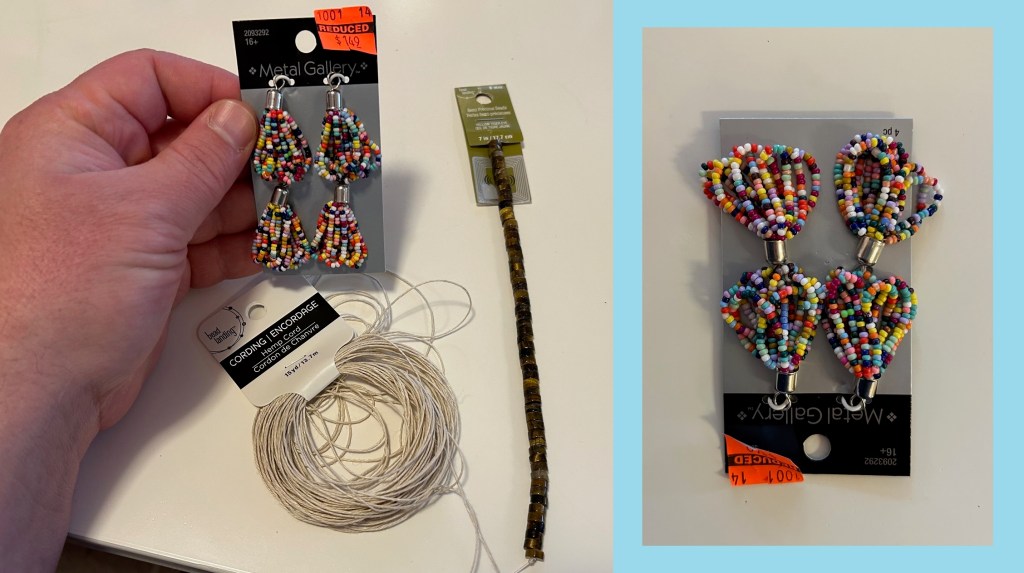
Well, during a recent trip to my local craft store, I happened to notice several bead sets on sale, and I decided to experiment! A particular set of tassels caught my eye for potential use as the flower’like arms and “head” of the creature. While an open, stringy tassel might also work, I particularly like that these were made with very small beads, reminiscent of the segmented look of crinoid arms. While these ones were looped, which messes with their function as arms, I decided the segmented look won out over my concern about the overall shape, and went ahead and bought them, along with some basic round cylindrical beads for the stalk.
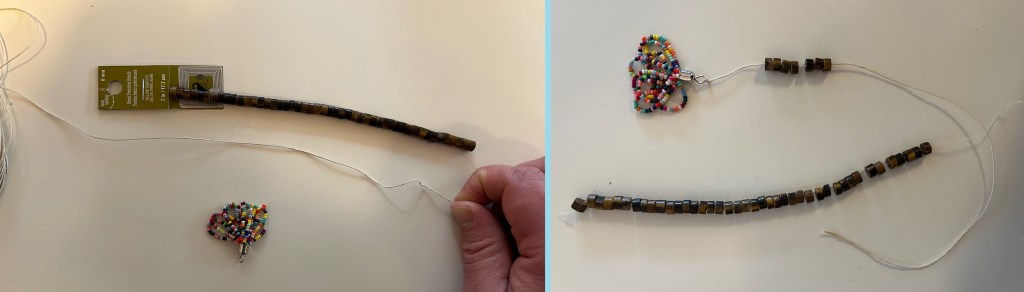
While I bought multiple sets of the cylindrical beads, the default number in each strand seemed good for my purposes (though crinoid stems could be longer or shorter depending on the age of the individual animal). Measuring out a length of string a little longer than the bead set’s packaging, I tied one end to the tassel and started stringing the beads onto it.

Once I had all the beads strung on, I made a few bowties at the end, and then snipped the loops to create an effect that suggested the root-like “holdfasts” that a sea lily uses to stay connected to the sea floor. The finished product is pretty simple, but comparing to a full-body fossil of a real crinoid, I think it achieves the basic look rather well!

So there’s my little crinoid craft, next to some of my own personal crinoid stalk specimens for effect! I’m pretty happy with how it turned out. If you would like to make your own, feel free to follow the steps I’ve provided here, or add your own twists on the design where you see fit. I’d love to see what you make! You can tag me as @dinodadreviews on most of the major social media sites. I’m currently on Instagram, BlueSky, “Twitter”, and Mastodon. I look forward to your creations!
I haven’t reviewed any books on crinoids/sea lilies specifically, but they’ve shown up on the sidelines in a number of the books I that have reviewed! While they are still alive today, and thus could be considered a sort of “living fossil”, they seem to be stereotypically associated with Paleozoic environments, and thus you’ll find plenty of them in Ocean Renegades!, Into The Ordovician, & Silurian Journey, though there’s also a striking illustration of an ichthyosaur investigating some attached to a floating log in the Triassic portion of When Fish Got Feet, Bugs Were Big, and Dinos Dawned!
 Dino Dad Reviews