

For this review, I’m taking a look at Titanosaur: Life as the Biggest Dinosaur, a book published in conjunction with the Patagotitan display of the same name at the Natural History Museum in London. This tie-in book was written and illustrated by David Mackintosh, who also wrote a book on “Dippy” the Diplodocus, the previous star sauropod of the NHM. (A hearty thank-you to the wonderful Natee Himmapaan, who sent this to me after picking it up on a trip to the NHM [and whose beautiful art can be purchased at Redbubble]!)
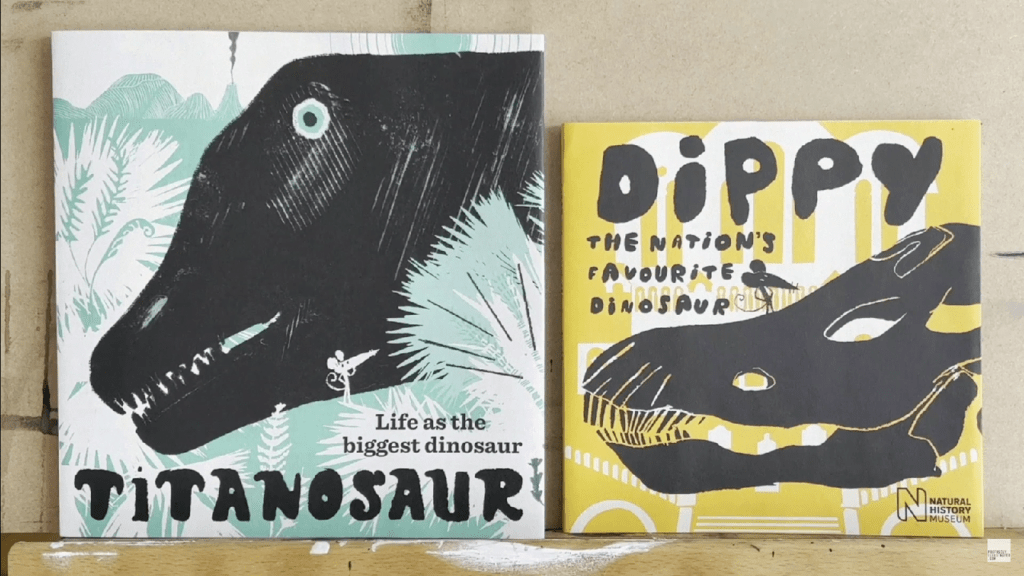
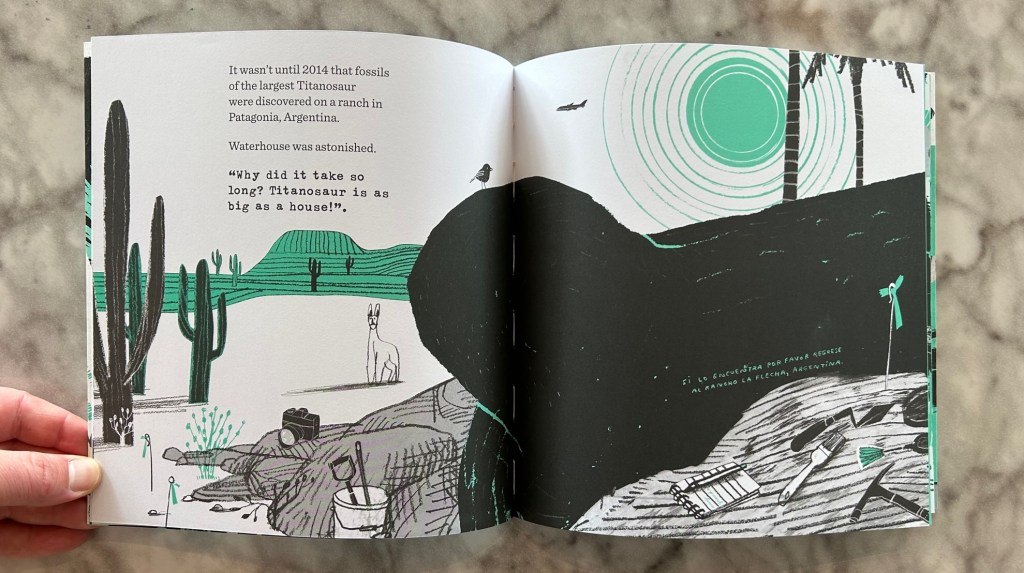
In contrast to the other Titanosaur book I have previously reviewed, this one is told in the form of a “day in the life” story as opposed to the more “matter of fact” presentation of the previous book. It is in this respect more similar to The Dinosaur Expert, though that story involves Patagotitan only tangentially. Our story here follows the perspective of Waterhouse the Mouse, an enthusiastic (if perhaps slightly oblivious) resident of the NHM. (His name is a reference to the architect of the museum, and not, as I originally supposed, Benjamin Waterhouse Hawkins.)

Waterhouse hears that the museum has put a new dinosaur known as “the Titanosaur” on display, and so he goes exploring around the grounds to see it for himself. As he wanders, he recounts the sensational facts about it that he has overheard, which in turn educates the reader second-hand.
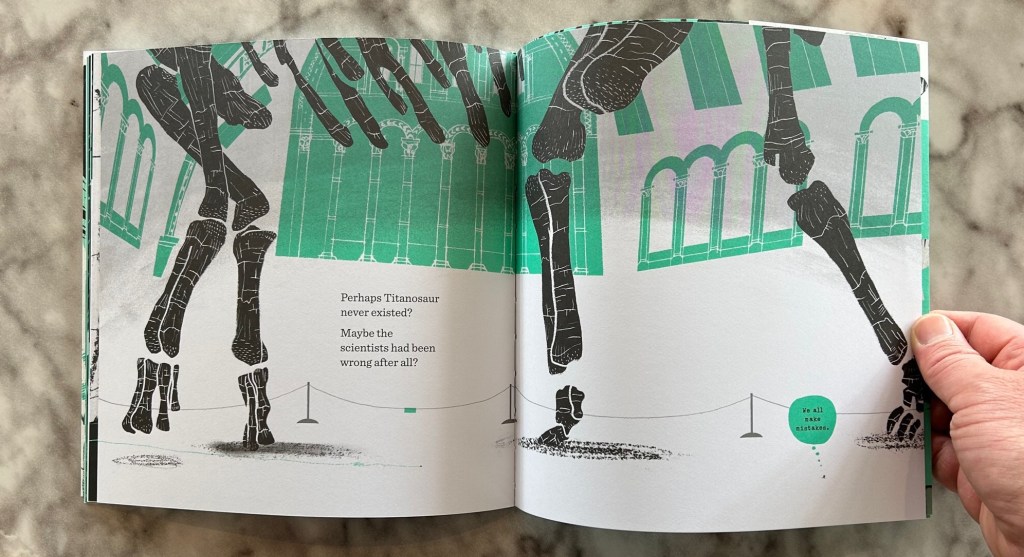
Ultimately unsuccessful in his quest, at least for the day, he heads back to his mousehole. He wonders to himself if the Titanosaur even exists, as he obliviously walks right past its skeleton at that very moment. (This happens to reminds me of some speculation I’ve heard to explain why ancient people didn’t report finding fossil bones more often. The hypothesis goes that didn’t recognize dinosaur bones consistently because, being so large, people simply didn’t recognize they even WERE bones. I think this is a little far-fetched, and as documented in The First Fossil Hunters, there are plenty of accounts of giant bones being discovered that were simply attributed to mythical beings, and so it doesn’t seem like there is as much of a dearth of reporting as some people have suggested in the first place.)
Forgive the tangent: returning to the matter at hand, Titanosaur: Life as the Biggest Dinosaur is a cute little story that’s easy to read, with pleasing, stylized illustrations. It shows admirable foresight on the NHM’s part to create a quality book like this to go with their temporary Patagotitan exhibit, which is a level of thought put into at least one aspect of their merchandise that I wish were more common in museum gift shops in general. (The entire exhibit seems to have an extremely high level of intentionality behind it. I will have the chance to visit it myself, soon, but in the meantime, check out Acheroraptor & Edaphosaurus‘ video about their visit to the exhibit to see some of its cool features! The NHM also published this book’s predecessor, Dippy: The Nation’s Favourite Dinosaur, in connection with its star’s brief return to the museum.) The other Patagotitan book I’ve reviewed, Titanosaur: Discovering the World’s Largest Dinosaur, contains more information about its star, but this one makes for better family reading time. Indeed my six year old elected to take it to bed the other night, so I’d say that’s a better recommendation than any I could give! I shall of course give my own two cents anyway, and give Titanosaur: Life as the Biggest Dinosaur my Dino Dad Stomp of Approval.

 Dino Dad Reviews
Thank you for your review, I’m glad you enjoyed the book!
I believe Waterhouse Mouse is named after another Waterhouse in this case: the Natural History Museum’s architect, Alfred Waterhouse (1830-1905). ☺️
LikeLike